A leaking hot water heater can be an alarming issue for homeowners, often signaling anything from a minor valve problem to a major tank failure. If left unchecked, leaks can lead to water damage, corrosion, mold growth, and even safety hazards.
Understanding the root cause of a leaky water heater is the first step toward finding the best solution. Some leaks are easy to fix, such as loose pipe fittings or a faulty pressure relief valve, while others, like a cracked tank or sediment buildup, may require a complete water heater replacement.
In this guide, we’ll break down the most common reasons why water heaters leak, what steps you should take immediately, and when it’s time to call a professional.
Common Causes of a Leaking Hot Water Heater
Leaks from a water heater can occur for multiple reasons, depending on the source of the issue. Some problems can be easily fixed, while others indicate that the entire water heater may need to be replaced.
1. Faulty Pressure Relief Valve
The temperature and pressure relief (T&P) valve is a critical safety component on all hot water heaters. It prevents excessive pressure buildup inside the tank by releasing small amounts of water when necessary. However, when this valve malfunctions, it can start leaking continuously.
- High water pressure inside the tank can trigger the valve to release more water than usual. This happens if the pressure-reducing valve on the main water supply line is not working correctly.
- Sediment buildup inside the tank can cause the valve to malfunction, leading to unwanted leaks.
- If the valve itself is damaged or worn out, replacing it is the best solution to prevent further damage.
If you notice water leaking from the pressure relief valve, check if it’s properly seated. If the leak persists, the valve likely needs replacement.
2. Loose Inlet & Outlet Connections
A water heater has two main pipes: the cold water inlet and the hot water outlet. Over time, these connections can become loose, allowing water to drip from the fittings.
- Thermal expansion from heating cycles can gradually loosen pipe fittings.
- Corrosion around pipe connections can weaken the seal, leading to leaks.
- Damaged pipe fittings due to hard water exposure can accelerate leaks.
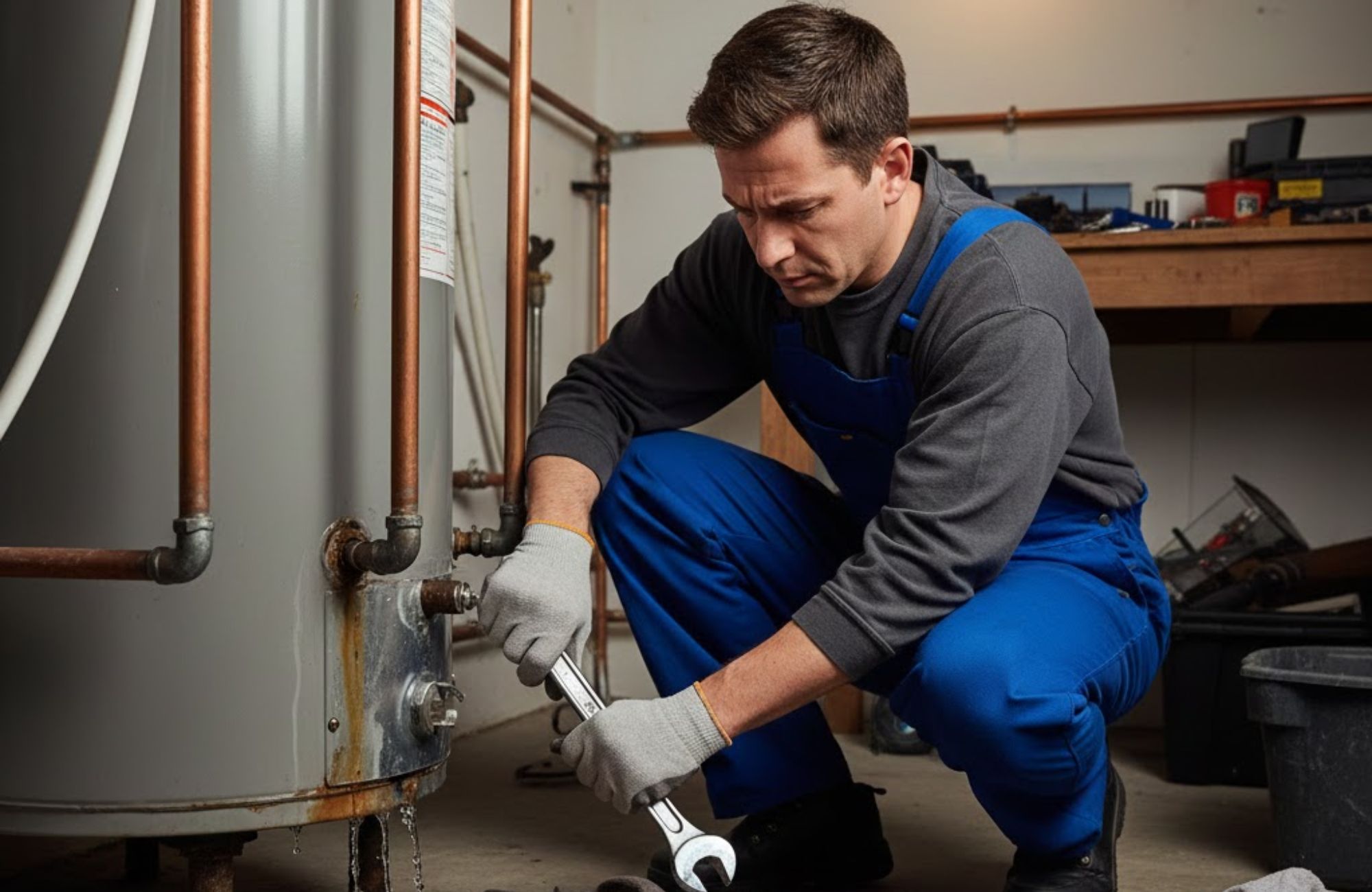
Tightening these connections with a wrench may resolve minor leaks. However, if corrosion is present, the fittings may need to be replaced.
3. Drain Valve Leaks
The drain valve is located near the bottom of the water heater tank and is used to flush out sediment buildup. If this valve starts leaking, it could be due to:
- A loose valve can sometimes be fixed by tightening it slightly.
- Sediment buildup prevents a proper seal, causing small leaks.
- A worn-out drain valve that needs replacement.
If the leak is minor, try flushing the tank and checking for debris buildup inside the valve. If the leak persists, replacing the valve is recommended.
4. Tank Corrosion & Internal Rusting
Over time, water heater tanks can corrode, especially in areas with hard water. The anode rod, which is designed to prevent rust, can wear out, leaving the water tank vulnerable to corrosion.
- A rusty or corroded tank is one of the most serious issues and usually means the heater needs replacement.
- Discolored hot water or rust-colored stains in your sink or tub can indicate an aging tank.
- Once corrosion inside the tank begins, there is no repair option, only replacement.
Regular water heater maintenance, such as replacing the anode rod, can extend the lifespan of the unit.
5. Excessive Water Pressure
High water pressure in your home’s plumbing system can put unnecessary strain on the water heater, leading to leaks at connection points or from the relief valve.
- A pressure-reducing valve should be installed if water pressure exceeds 80 PSI.
- Thermal expansion from constant heating can cause small leaks that worsen over time.
- Fluctuating water pressure can weaken pipe fittings, increasing the risk of leaks.
If you notice your water heater leaking intermittently, check your home’s water pressure and adjust it if necessary.
What to Do If Your Hot Water Heater Is Leaking
When you first notice a leaky water heater, taking quick action can prevent major problems like water damage and mold growth.
Step 1: Turn Off the Power Supply
- If you have an electric water heater, switch off the breaker in your electrical panel.
- If you have a gas water heater, turn the thermostat to the off position and close the gas supply valve.
Step 2: Shut Off the Water Supply
- Locate the cold water supply line above the heater and turn the valve clockwise to shut off the water flow.
Step 3: Drain the Tank If Necessary
- Attach a hose to the drain valve and direct it to a floor drain or outside area.
- Open the valve carefully to let water exit and reduce internal pressure.
Step 4: Inspect for the Source of the Leak
- Check pipe fittings, the drain valve, and the pressure relief valve for leaks.
- Look for signs of rust or corrosion inside the tank.
If the leak is minor and coming from a valve or connection, you may be able to fix it yourself. If the tank itself is cracked, replacement is required.
Repair vs. Replacement: How to Decide
Not all water heater leaks require a full replacement. In some cases, small repairs can extend the unit’s lifespan.
| Issue | Repair Cost | Replacement Cost |
| Pressure Relief Valve Leak | $150 – $350 | Not required |
| Drain Valve Leak | $100 – $250 | Not required |
| Tank Corrosion | Not repairable | $800 – $1,500 |
| Major Water Damage | Varies | $1,000 – $3,500 |
If your water heater is over 10 years old, replacement is often the best solution to avoid future leaks and costly repairs.
Preventing Future Water Heater Leaks
To extend the life of your water heater and prevent leaks, follow these maintenance steps:
- Flush the tank annually to remove sediment buildup and maintain efficiency.
- Inspect the anode rod every 2–3 years and replace it if worn out.
- Check for loose pipe connections and tighten them as needed.
- Monitor water pressure to prevent excess strain on the unit.
- Schedule professional inspections to catch issues early.
Conclusion
A leaking hot water heater can lead to costly repairs and potential water damage if not addressed promptly. Identifying the source of the leak and understanding whether a repair or replacement is necessary can help prevent further complications. Regular maintenance, including flushing the tank, checking for corrosion, and inspecting valves, can extend the lifespan of your water heater and reduce the likelihood of unexpected leaks. Taking proactive steps ensures reliable hot water access while protecting your home from damage.
If your hot water heater is leaking, don’t wait until it leads to costly damage. Prestige Water Group specializes in expert water heater diagnostics, repairs, and replacements to keep your home safe and your hot water system running efficiently. Our experienced professionals serve homeowners across New Jersey, providing reliable solutions tailored to your needs. Call (973) 227-4740 or email info@pwgroupnj.com to schedule an inspection. Visit our website to learn more about our water heater services and how we can help protect your home.
FAQs
What would cause a hot water heater to leak?
A water heater can leak due to faulty valves, corroded tanks, loose pipe fittings, or excessive water pressure. Over time, sediment buildup inside the tank can also cause overheating, leading to cracks or leaks in the unit.
Where is a water heater most likely to leak?
Leaks commonly occur at the drain valve, pressure relief valve, inlet and outlet pipes, or from the bottom of the tank. In older units, rust and corrosion can weaken the tank’s structure, allowing water to escape.
Is a leaking hot water heater an emergency?
A leaking water heater can become an emergency if the leak is severe, rapidly worsening, or located near electrical components. Even a small leak should be addressed quickly to prevent water damage, mold growth, or complete system failure.
Can I still use a water heater if it is leaking?
If the leak is coming from a loose connection or faulty valve, it may still be safe to use until repairs are made. However, if the tank itself is cracked or corroded, continued use can lead to major water damage and system failure, making replacement necessary.