If your shower suddenly feels more like a trickle than a stream, you’re not alone. Water pressure problems can make a relaxing shower feel frustrating. One question many homeowners ask is, Do you lose shower water pressure with plumbing in the ceiling? It’s a reasonable concern, especially if your pipes are routed overhead. In places like Northern New Jersey, where homes vary in design, understanding how plumbing layout affects pressure can help you get to the root of the issue.
This guide explores whether ceiling plumbing causes a noticeable drop in pressure in the shower. We’ll cover everything from how your plumbing system functions to the real reasons you might be losing pressure, and what can be done about it. If you’re looking for straight answers and practical solutions, you’re in the right place.
Introduction to Water Pressure
Water pressure is the driving force behind the flow of water through your home’s plumbing system, and it plays a vital role in how well your fixtures perform, especially your shower. When you turn on the shower valve, the pressure in the shower determines how strong and consistent the water flow will be. If the water pressure is too low, you might experience a weak stream that makes rinsing off difficult; if it’s too high, it can strain your pipes and fixtures.
Understanding the basics of water pressure is key to diagnosing and fixing issues like low water pressure in the shower. Water pressure is measured in pounds per square inch (PSI), and several factors can influence it, including the water supply from your municipality, the pipe size used throughout your plumbing system, and the overall plumbing design in your home. Most homes have water pressure ranging from 30 to 80 PSI, but the ideal range for a comfortable shower is typically between 40 and 60 PSI.
By familiarizing yourself with how water pressure, water flow, and your plumbing system interact, you’ll be better equipped to spot problems and maintain optimal pressure in the shower and throughout your home.
What Causes Shower Pressure Loss in the First Place?
Shower pressure loss is often the result of several overlapping issues. In many cases, these problems develop gradually and go unnoticed until the pressure drop becomes too significant to ignore.
Pressure loss usually stems from:
- Clogged or corroded pipes that restrict water flow
- Faulty pressure regulators that fail to maintain consistent pressure
- Leaking pipes, especially in hidden areas like ceilings or walls
- Sediment buildup in water heaters or valves
- Flow restrictors in shower heads are meant to conserve water, but may reduce pressure over time
Mineral deposits and debris can accumulate inside pipes and fixtures, leading to clogs and clogged pipes. These obstructions are common causes of lower water pressure, as they block or restrict water flow in showerheads, faucet lines, and internal valves.
Older homes with galvanized steel pipes are particularly vulnerable to corrosion, mineral deposits, and clogs, which narrow the pipe’s internal diameter and disrupt flow rate. Even newer homes aren’t immune to a poorly designed plumbing layout, or an incorrectly installed pressure regulator can cause ongoing problems.
If you’re experiencing low water flow at your shower but not your kitchen sink, the issue may be isolated to that plumbing line or fixture.
How Plumbing Systems Manage Water Flow
To understand why water pressure fluctuates, it’s important to know how your plumbing system works. When you open a shower valve, water is pulled from the main supply line, controlled by shut-off valves and a water pressure regulator, and delivered to your fixture through a network of pipes.
Each of these components plays a role in maintaining or affecting water pressure:
- Pressure regulator: Balances pressure from the water mains to protect your home’s plumbing
- Shut-off valves: Control water flow to specific sections of your house
- Pipe size and material: Influence how fast and efficiently water can travel
- Diverter valve: Redirects water to different shower components, like a handheld wand or rain head
It’s also important to inspect the pipes leading to your shower and other fixtures for signs of damage, corrosion, or blockages, as issues in these pipes can significantly affect water flow and pressure.
When any part of this system underperforms, your shower will too. And yes, even small blockages in fittings or supply lines can reduce pressure significantly.
Can Plumbing in the Ceiling Cause Water Pressure Loss?
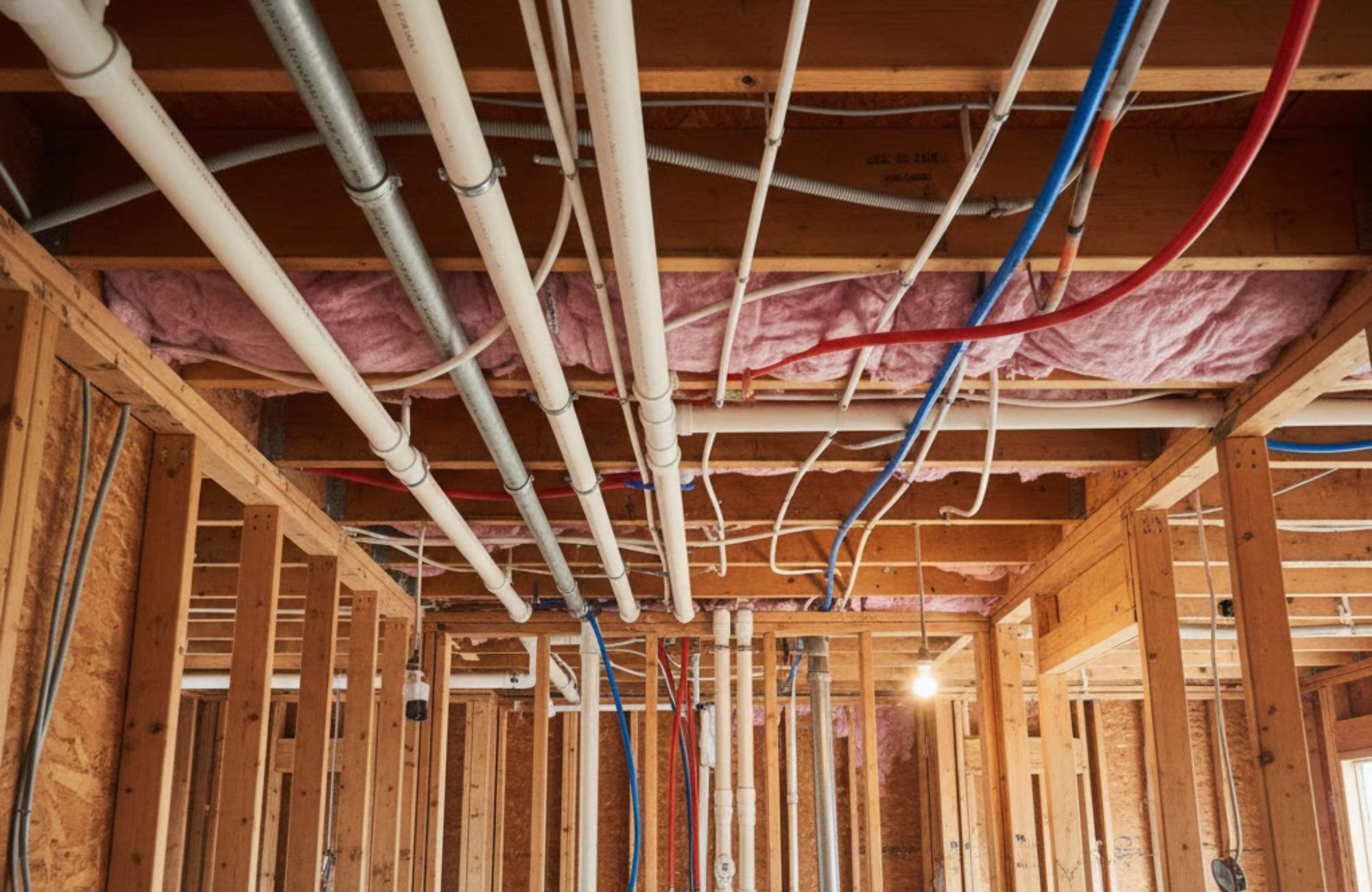
Ceiling-mounted plumbing is often used in multi-story homes, retrofits, or where access through walls or floors isn’t feasible. But does the location alone reduce your shower’s water pressure?
The short answer: Not necessarily.
Water is under pressure in most residential systems, so it can travel vertically without major losses. However, a poorly designed ceiling plumbing layout can affect water pressure and impact water pressure in specific situations:
- Long vertical runs with multiple fittings or elbows can increase friction and restrict flow
- Leaking joints or loose connections in ceiling areas are harder to detect and may slowly reduce pressure
- Improper pipe sizing in ceiling routes can limit the volume of water delivered to your fixtures
That said, ceiling plumbing is not inherently problematic. Modern systems are engineered to maintain consistent pressure regardless of routing, as long as installation quality is high and components are well-maintained.
In Northern NJ, where many homes have older infrastructure, issues may stem more from aging materials than the pipe location itself.
Measuring Water Pressure
Checking your home’s water pressure is a simple task that can provide valuable insight into the health of your plumbing system. All you need is a pressure gauge or a water pressure test kit, both of which are readily available at hardware stores.
To measure water pressure, start by attaching the pressure gauge to a hose bib (an outdoor faucet) or an indoor faucet. Make sure all other water-using appliances are turned off to get an accurate reading. Turn on the water supply and observe the gauge; the number displayed is your water pressure in PSI. For a thorough assessment, it’s a good idea to measure water pressure at different points in your plumbing system, such as at the kitchen sink, bathroom faucet, and shower. This helps identify any pressure drops or inconsistencies that could signal a problem with your water flow or plumbing.
Regularly monitoring your water pressure can alert you to issues before they become major headaches, ensuring your plumbing system delivers consistent flow and performance throughout your home.
Shower Heads and Fixtures: How They Affect Pressure
Your shower head, especially if it’s a blocked showerhead, plays a bigger role in water pressure than many homeowners realize. Even if your supply line delivers adequate flow, a restrictive or clogged shower head can reduce it to a trickle. Ensuring water is flowing freely from the showerhead is key to maintaining good pressure.
Common pressure-related issues include:
- Mineral buildup in the shower arm or spray nozzles. Soaking the showerhead in vinegar for several hours can dissolve these deposits.
- Internal flow restrictors that limit water consumption. Removing a flow restrictor can sometimes improve pressure, but may increase water usage.
- Incompatible designs (e.g., low-flow heads not suited for low-pressure homes)
Before blaming the ceiling plumbing, try unscrewing your shower head and testing the water flow directly from the pipe. If pressure improves, the fixture is likely the issue. Cleaning or replacing a showerhead is often a simple fix for low pressure.
Solutions to Restore Shower Pressure
Fortunately, there are several solutions to increase your shower’s water pressure, many of which are affordable and quick to implement. Maintaining adequate water pressure is essential for a satisfying shower experience.
Consider the following:
- Clean or replace your shower head to eliminate blockages or outdated flow restrictors
- Check shut-off valves to ensure they are fully open and not partially restricting flow
- Inspect for hidden leaks, especially in ceilings or behind walls, which can be confirmed by a pressure test
- Upgrade to larger pipes or reroute plumbing to minimize friction and improve flow rate
- Install a shower pump or pressure-boosting system if your home’s water demand is high, or if you need more pressure for your shower
- Service or replace your pressure regulator, especially if it’s more than 10 years old
- Fix or replace faulty mixing valves and ensure your shower valves are properly adjusted to maintain adequate water pressure
If the problem is tied to the overall water supply or water usage in your home, a full plumbing inspection may be necessary. These solutions can help restore your shower’s water pressure to optimal levels.
Does Your Water Heater Impact Shower Pressure?
Yes indirectly.
Your water heater, especially if it’s older or filled with sediment, can be causing low water pressure and reduced water flow, and temperature regulation. Sediment buildup narrows the tank’s exit pipe, creating resistance. In electric showers, inconsistent water temperature often mimics low pressure.
Signs your water heater might be involved include:
- Low pressure only when using hot water
- Long wait times for hot showers
- Temperature fluctuations mid-shower
If you notice these issues, flushing the heater or upgrading to a tankless system might help.
Should You Upgrade Your Plumbing System?
If your home has galvanized steel pipes, frequent pressure drops, or is over 30 years old, it may be time to consider a plumbing upgrade.
Benefits of a system upgrade:
- Consistent water pressure across all fixtures
- Fewer leaks and maintenance issues
- Compatibility with newer water-saving appliances
Upgrades may include rerouting ceiling plumbing to improve access, replacing undersized or corroded pipes, and modernizing shut-off and pressure-reducing valves. Replacing a faulty pressure regulator or worn-out pressure-reducing valve can also restore proper water pressure throughout your home. A professional plumber can assess your system and recommend cost-effective updates.
Can Multiple Fixtures Running at Once Affect Pressure?
Absolutely. If multiple showers, faucets, or appliances are running at the same time, your water pressure can dip. This is known as demand-based pressure drop, and it’s common in larger households or homes with undersized supply lines.
If you notice pressure drops when several fixtures are used at once, inspect the water line for blockages or damage, as clogged or obstructed water lines can contribute to the problem.
When more fixtures are drawing from the same water supply, the available pressure is divided. Homes with older plumbing systems or smaller diameter pipes may experience this more frequently.
One way to mitigate this is to stagger water use or install a pressure-balancing valve. Upgrading your plumbing system to support modern demand levels can also provide long-term relief.
How Elevation and Gravity Affect Shower Pressure
While most residential water systems are pressurized enough to move water upward, gravity and elevation still play a role in how water behaves. If your shower is located on a second or third floor, water must overcome more vertical distance.
This vertical lift doesn’t usually cause a major pressure drop unless your water pressure is already marginal. In homes where the main water supply enters at a lower level and the shower is at a higher point (especially in homes with ceiling-mounted plumbing), there can be slight pressure differences. It’s important to ensure that both hot and cold water reach the shower at the same pressure to maintain consistent performance and avoid issues with water flow quality.
In extreme cases, such as homes on hills or with rooftop plumbing configurations, a break tank or booster pump may be recommended.
Costs and Benefits of Addressing Water Pressure Issues
Tackling water pressure problems in your home can offer a range of benefits, from a more satisfying shower experience to improved water efficiency and even increased property value. The cost of resolving water pressure issues depends on the underlying cause and the solution required. Simple fixes, such as cleaning a clogged showerhead or replacing a faulty valve, can be quite affordable, often costing as little as £50. More involved solutions, like installing a shower pump, replacing corroded pipes, or upgrading parts of your plumbing system, may range up to £500 or more.
While there is an upfront investment, the long-term benefits are substantial. Restoring proper water pressure can reduce water consumption, lower your energy bills, and prevent further damage to your pipes and fixtures. In many cases, addressing these issues also means fewer plumbing emergencies and less frequent repairs down the line. Ultimately, investing in your home’s plumbing system not only enhances your daily comfort but also adds value to your property.
Conclusion
Ceiling-mounted plumbing alone is rarely the main reason behind reduced shower water pressure, but it can contribute when combined with other factors like aging pipes, poor installation, or leaks. In most cases, pressure loss stems from issues within the broader plumbing system, such as clogged fixtures, faulty regulators, or sediment buildup. By understanding how each component affects water flow and identifying where problems originate, homeowners can take informed steps to restore strong, consistent shower pressure.
Prestige Water Group specializes in diagnosing and resolving complex water pressure issues, including ceiling-mounted plumbing systems. Call (973) 227-4740 or email info@pwgroupnj.com to speak with our licensed experts. Visit pwgroupnj.com to learn more about our plumbing services across Northern NJ.
FAQs
What would cause water pressure to drop in the shower?
Several issues can cause water pressure to drop in the shower, including clogged shower heads, leaking pipes, sediment in your water heater, or a failing pressure regulator. Plumbing design and peak household water usage can also affect flow.
Is water pressure affected by the shower head?
Yes, the shower head has a direct impact on perceived water pressure. Models with flow restrictors or mineral buildup can reduce flow. Replacing or cleaning the head often restores pressure.
Why does my shower no longer have pressure?
A sudden loss in shower pressure may indicate a leak, a closed shut-off valve, a blocked pipe, or problems with the pressure regulator. It can also be due to a failing diverter valve or water heater issue.
What controls shower water pressure?
Shower water pressure is controlled by your home’s pressure regulator, supply line size, plumbing layout, shut-off valves, and the condition of your fixtures. Regular inspections help ensure everything is functioning properly.