Introduction to Finding Underground Water Leaks
An underground water leak is one of the most challenging plumbing issues a homeowner can face. Hidden below soil, concrete, or landscaping, these leaks can go undetected for weeks, leading to rising water bills, foundation damage, and even mold growth. Many homeowners ask, “how does a plumber find a water leak underground?” The answer lies in the use of specialized tools and techniques. Professional plumbers rely on advanced water leak detection methods to locate and fix these hidden threats quickly and accurately.
Knowing how a plumber finds a water leak underground not only helps you understand the value of expert services, but it also prepares you to act quickly when warning signs appear. Whether the leak is under your yard, driveway, or foundation, a possible leak is early detection key to minimizing damage and costly repairs.
Signs of a Plumbing Leak
Underground leaks can show up in subtle but telling ways. You might not see the pipes, but your home will give off signs when something’s wrong. Catching these early can save you from more serious structural issues and possible water damage down the line.
Look out for:
- Soggy patches in your lawn or driveway, especially when it hasn’t rained
- Sudden spikes in your water bill without increased usage
- Lush or overgrown patches of grass over specific areas of your yard
- Reduced water pressure at faucets or fixtures
- Cracks in your foundation or pavement
These telltale signs often point to a broken or leaking underground water line. A professional plumber will use this initial visual inspection to guide further diagnostic steps.
Preparing for Inspection
Before the detection process begins, a plumber will gather information from you and your property. This includes:
- Water bill history and usage patterns
- Reports of unusual noises, such as running water when all taps are off
- Noting any visible moisture, cracks, or puddling near the home
You can help by checking your water meter. Shut off all water sources in your home and observe whether the meter continues to move. If it does, a hidden leak may be present.
Shutting off the main water supply allows the plumber to isolate the source and determine whether the leak is indoors or outside.
Visual Inspection and Surface Clues
Plumbers begin with a visual inspection to look for surface evidence of leaks. This non-invasive step often helps to detect temperature variations and reveals the general area of concern without digging.
Common surface clues include:
- Erosion or soil displacement
- Pooling water in the yard or near the foundation
- Wet spots or soft ground
- Unexpected plant growth in dry areas
These clues help plumbers narrow down the leak’s location before moving on to technical detection methods.
Advanced Leak Detection Methods
Once the surface area is identified, plumbers rely on a variety of advanced tools to precisely locate the leak. These methods allow them to avoid unnecessary excavation and reduce disruption to your property.
Acoustic Leak Detection
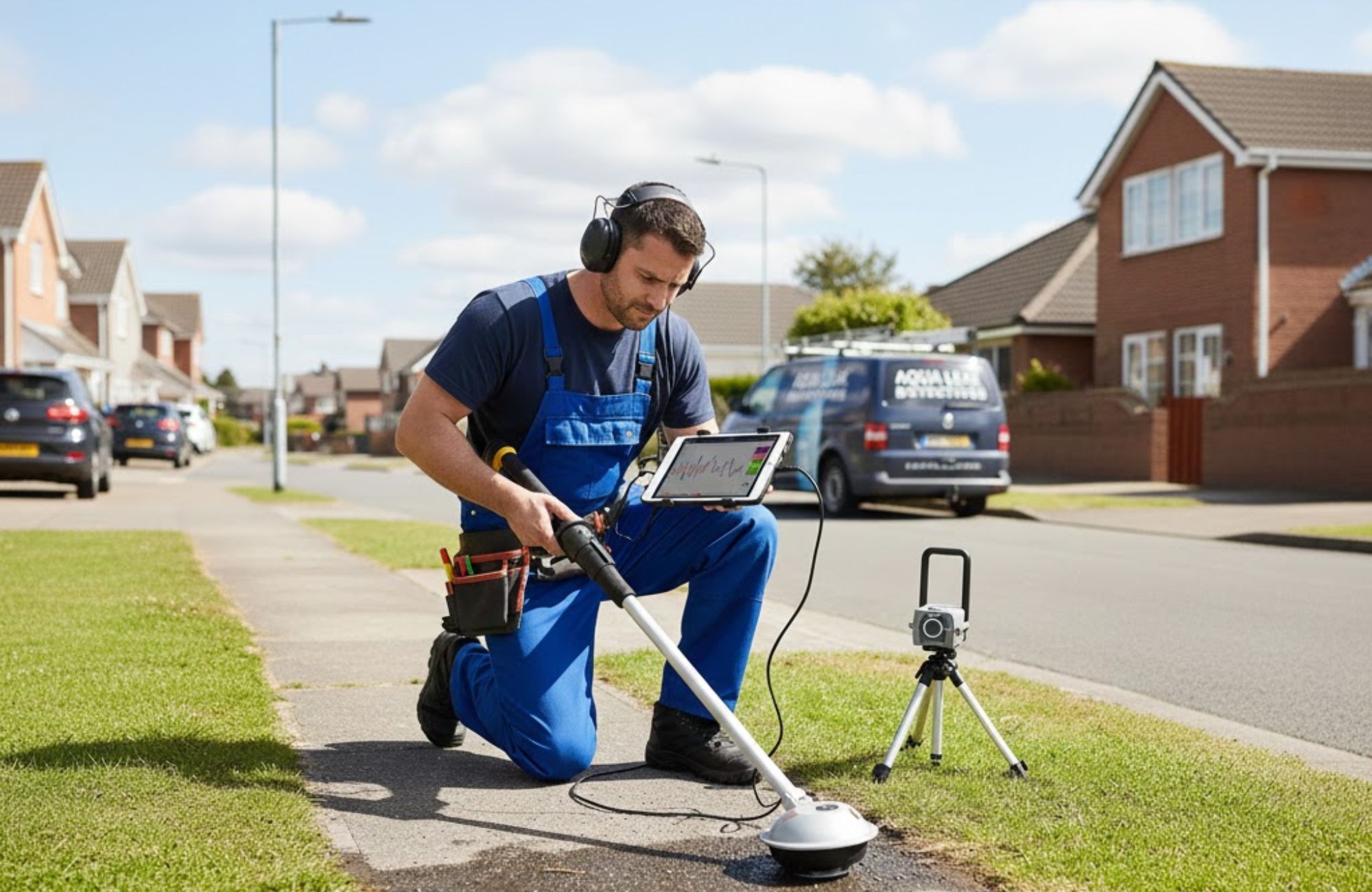
This method uses highly sensitive microphones and ground sensors to detect the sound of water escaping from a pipe. Even a few drops can create a telltale sound profile underground, indicating temperature variations.
Thermal Imaging
Thermal imaging cameras detect subtle temperature differences in the soil caused by escaping water. Cool or warm spots may indicate an active leak, especially when used near concrete slabs.
Pressure Testing
Plumbers isolate sections of your plumbing system and use pressure gauges to identify pressure drops. A pressure drop often confirms a leak in that specific section.
Soil Probing
Probes are inserted into the ground to detect areas with abnormal moisture levels. Combined with sound detection, this helps pinpoint leaks without excavation.
Non-Invasive Detection Techniques
Non-invasive leak detection helps plumbers find leaks without digging up your lawn or breaking through concrete. These modern methods are more accurate and less damaging.
Advantages of non-invasive techniques:
- No property damage from guesswork
- Faster detection with minimal disruption
- Lower repair and restoration costs
Technologies like acoustic sensors, thermal imaging, and ground microphones allow plumbers to monitor water flow efficiently and accurately, ensuring your property is treated with care.
Common Causes of Underground Leaks
Understanding what causes leaks can help prevent them. Many underground plumbing issues stem from gradual wear, air, and environmental conditions.
Common causes include:
- Corrosion in aging metal pipes (especially galvanized steel or copper)
- Ground movement from seismic activity or soil shifting
- Tree root intrusion into underground pipes
- High water pressure stresses joints or weak spots
- Improper installation or use of substandard materials
Plumbers consider all of these possibilities during the diagnostic process.
Identifying the Root Cause
It’s not enough to simply patch a leak. Identifying the root cause ensures the issue doesn’t recur. A licensed plumber will:
- Review the age and type of pipe material
- Evaluate soil conditions around the damaged area
- Inspect for signs of external damage from construction or landscaping
- Analyze water pressure trends
Pinpointing the underlying issue is crucial for recommending the right repair, whether it’s a minor seal fix or full pipe replacement.
Professional Help for Leak Repair
DIY approaches to underground leaks are risky and often ineffective. Professionals have the training and tools to complete the job safely, ensuring all necessary repairs are performed thoroughly.
Here’s what a plumber typically offers:
- Precise leak detection using specialized equipment
- Detailed diagnostics to prevent further damage
- Proper permits and safety compliance for repairs
- High-quality repairs that last
Working with a licensed professional means your repairs will meet code requirements and be backed by a service warranty.
Repairing Underground Leaks
After the leak is located, plumbers determine the best repair approach. In some cases, trenching is required. In other cases, minimally invasive methods can be used.
Common repair methods include:
- Pipe patching for localized damage
- Pipe relining to reinforce existing pipes
- Trenchless repairs using modern no-dig methods
- Full pipe replacement if the damage is extensive
The chosen method depends on pipe condition, accessibility, and the extent of damage.
Preventing Future Leaks
After repairs are complete, prevention becomes the focus. Preventive maintenance protects your investment and reduces the risk of recurring issues.
Ways to prevent future leaks include conducting a simple test :
- Schedule annual plumbing inspections
- Install a pressure regulator to control water pressure
- Replace aging pipes before they fail
- Use root barriers to protect underground lines
A plumber can also offer advice tailored to your home’s age, layout, and environment.
Detection Tools and Equipment
Plumbers rely on cutting-edge tools to find underground leaks efficiently:
- Acoustic listening devices detect sound vibrations through the soil
- Thermal imaging cameras locate temperature changes caused by water
- Pressure testing kits isolate problem sections
- Ground microphones and probes narrow the search without excavation
These tools allow plumbers to locate leaks within inches, saving time and money.
Conclusion
Finding and fixing an underground water leak requires expertise, precision, and the right equipment. Plumbers use a combination of visual inspection, non-invasive detection tools, and diagnostic testing to locate the leak’s exact location without unnecessary damage. If you suspect a hidden leak, don’t wait. Early detection prevents costly repairs, structural damage, and rising water bills.
Suspect an underground water leak? Prestige Water Group offers expert leak detection and plumbing solutions across Northern New Jersey. Using advanced tools like thermal imaging and acoustic sensors, we accurately locate and repair hidden leaks before they cause costly damage. Call (973) 227-4740 or email info@pwgroupnj.com to schedule your inspection today.
FAQs
What is the easiest way to find a water leak underground?
The easiest way is to hire a plumber who uses tools like thermal imaging and acoustic sensors. These technologies can locate leaks without digging up your yard or damaging your home.
How do I know if my underground water pipe is busted?
Signs of a busted underground pipe include high water bills, reduced water pressure, soggy spots in your yard, and cracks in your foundation. A plumber can confirm the issue, such as an unexpected increase in water bill, using pressure testing and other tools.
How do plumbers detect water leaks?
Plumbers use non-invasive tools like acoustic leak detectors, thermal cameras, and soil probes. These allow them to pinpoint leaks accurately without damaging property.
How to locate water pipes underground?
Water pipes can be located using ground-penetrating radar, pipe locators, or by referencing building plans. Plumbers also use detection tools that follow metal or PVC pipe paths below the surface.