You usually notice a broken water heater when hot water becomes unreliable or disappears altogether. Cold showers, reduced hot water, strange noises, or moisture around the unit are common warning signs. Catching these issues early helps prevent water damage, higher utility bills, and unexpected breakdowns.
This guide explains the most common signs of a failing water heater, what each sign usually means, and when it makes sense to call a licensed plumber. The focus is on residential systems, including gas water heaters, electric water heaters, and tankless water heaters.
How to Know If Your Water Heater Is Broken
A water heater heats water and stores it in a tank or produces hot water on demand in a tankless unit. When parts wear down, problems show up in simple ways. Changes in water temperature, unusual noises, or visible leaks are often warning signs. Some issues are minor. Others mean the entire unit may be near the end of its useful life.
Most Common Signs Your Water Heater Is Broken
Below are the common signs that your water heater is not working properly
No Hot Water or Sudden Cold Showers
One of the clearest signs that a water heater is broken is having no hot water at all. You may turn on a hot tap and get only cold water, even after waiting several minutes. This problem is often caused by a failed heating element in an electric water heater, a pilot light that will not stay lit in gas water heaters, a faulty gas valve, or an electrical issue such as a tripped circuit breaker or short circuit. If hot water runs briefly and then stops, the lower heating element in systems with two elements may not be working.
Lukewarm Water or Less Hot Water Than Usual
Lukewarm water or inconsistent water temperature is another common warning sign. You may notice the water never gets fully hot or fluctuates while showering or washing dishes. This often happens when sediment or mineral buildup covers the heating element, one of the two heating elements stops working, or the water heater tank begins to lose efficiency. In tankless systems, low water pressure can also limit how much hot water is produced. Older water heaters are especially prone to this issue as internal components wear out.
Strange Noises From the Unit
Strange or unusual noises coming from the water heater usually point to sediment buildup inside the tank. Popping, cracking, or rumbling sounds often mean sediment has settled at the bottom of the tank, forcing the unit to work harder to heat water through mineral layers.
As sediment buildup increases, heat transfer becomes less efficient, and energy use rises. In areas with hard water, this buildup happens faster without a water softener. Flushing the tank may help early on, but heavy buildup can already cause internal damage.
Rusty or Discolored Water From Hot Taps
Rusty or discolored water coming only from hot taps typically signals corrosion inside the water heater tank. This is often caused by a worn anode rod that can no longer protect the tank from rust. When corrosion spreads, it weakens the tank walls and increases the risk of leaks. If discoloration continues, the tank may already be deteriorating from the inside.
Leaks, Moisture, or Water Damage Around the Tank
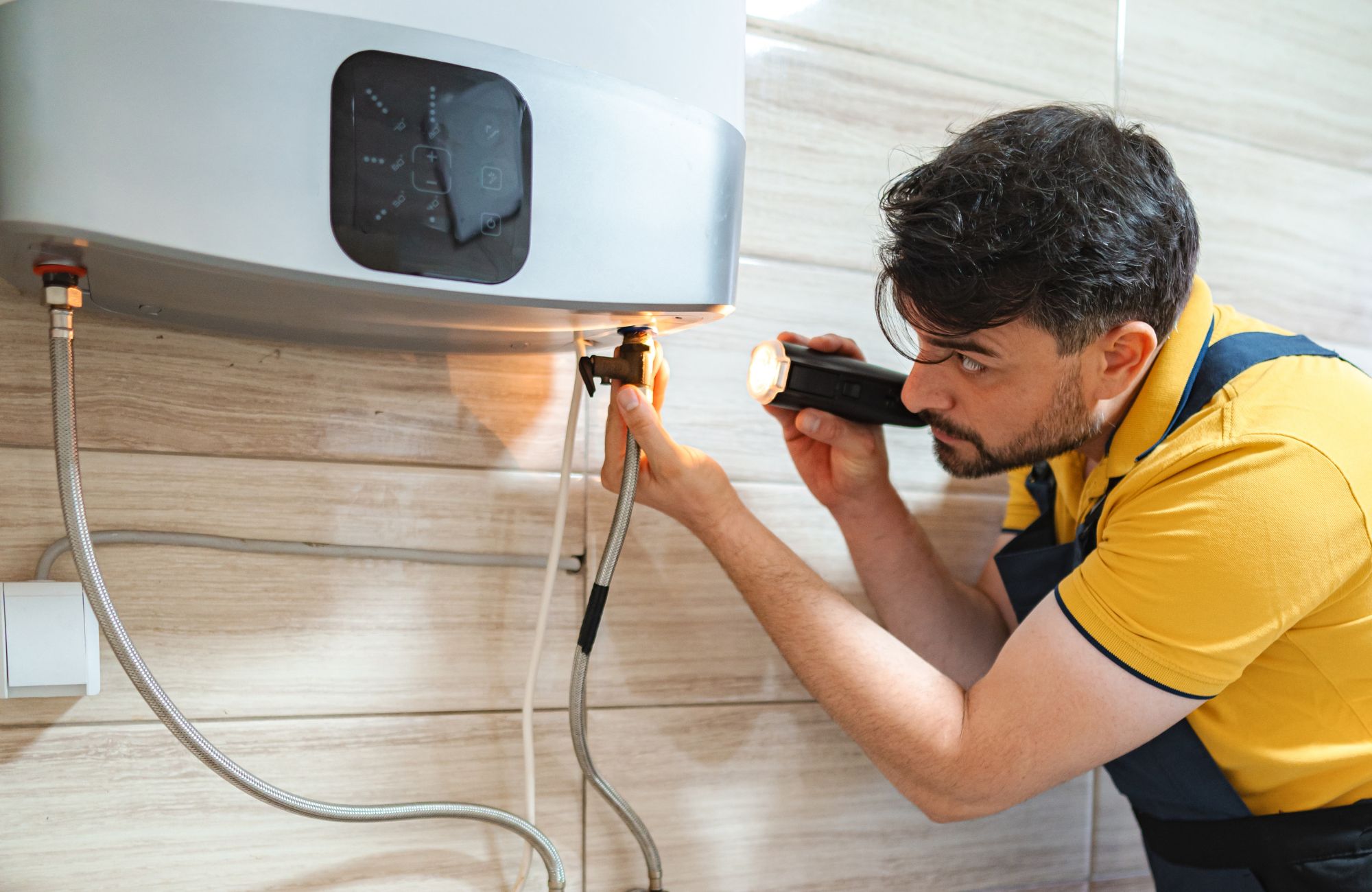
Leaks around the base of the water heater or signs of moisture nearby should never be ignored. These issues can stem from loose fittings, failing connections, a leaking pressure relief valve, or cracks forming in the tank itself. Tank leaks usually mean the entire unit needs replacement rather than repair. If leaks continue, water damage can spread quickly to floors, walls, and nearby fixtures.
Higher Energy Bills Without Increased Use
A failing water heater often leads to higher energy bills, even when your hot water usage stays the same. Sediment buildup, corrosion, or aging components force the system to run longer to reach the desired temperature.
You may notice rising utility bills, reduced energy efficiency, and longer recovery times between hot water cycles. In many cases, replacing an older unit becomes more cost-effective than continuing to pay for inefficient operation.
Signs Based on Water Heater Type
Different types of water heaters fail in different ways. Knowing how gas, electric, and tankless systems commonly break down can help you spot the issue faster.
Gas Water Heaters
Gas water heaters rely on a steady pilot light and a properly working gas valve to heat water consistently. When problems occur, they are often tied to issues such as a pilot light that will not stay lit, a gas valve failure, or inconsistent heat throughout the home. These issues can interrupt the hot water supply and may cause the system to shut down entirely. Because gas-related problems involve fuel and combustion, any issue with gas water heaters should be handled by a professional plumber for safety.
Electric Water Heaters
Electric water heaters depend on heating elements and electrical controls to produce hot water. Common problems include a failed heating element, a tripped circuit breaker, or a short circuit in wiring. Many electric units use two heating elements. When one fails, the system may still produce some hot water, but not enough to meet daily needs. Electrical issues should be inspected carefully to avoid repeated failures or damage to the unit.
Tankless Water Heaters
Tankless water heaters heat water on demand rather than storing it in a tank. Common issues include mineral buildup inside the tankless unit, low water pressure limiting output, and less hot water during peak use. These problems can reduce performance, especially in homes with hard water or high simultaneous demand. Regular maintenance helps tankless systems remain energy efficient and perform reliably over time.
What Causes a Failing Water Heater Over Time
Several factors contribute to water heater failure as the system ages. The most common causes relate to internal buildup and the natural limits of a unit’s useful life.
Sediment and Mineral Buildup
Hard water causes sediment and mineral buildup inside the tank. Over time, sediment buildup reduces heating performance, forces the unit to work harder, and increases wear on internal components. A water softener can slow this process by reducing mineral content, but it does not stop sediment buildup entirely. Without regular maintenance, sediment continues to accumulate and shortens the lifespan of the water heater.
Age and Useful Life
Most residential water heaters have a limited useful life. As older water heaters age, internal parts wear down, making breakdowns more common and repairs less effective. Signs that age is a factor include frequent repairs, costly repairs that only provide short-term fixes, and lower energy efficiency. When these issues become consistent, replacement is often the better long-term option.
Repair vs Replacement: When to Replace the Entire Unit
Deciding between repair and replacement depends on the condition of the water heater and the type of problem involved. Some issues are minor and affordable to fix, while others signal that the entire unit is no longer reliable.
When Repair Is a Good Sign
Repair may make sense when the problem is isolated, and the rest of the system is still in good condition. Common situations where repair is often reasonable include a loose fitting, one heating element that has failed, or a unit that shows no corrosion inside the tank. These types of repairs are usually cost-effective and can extend the life of the water heater.
When Replacement Is the Better Choice
Replacement services are usually recommended when damage affects the structure or lifespan of the system. This includes cases where the water heater tank is leaking, corrosion is present inside the tank, the entire unit is near the end of its useful life, or frequent repairs no longer save money. In these situations, installing a new water heater improves energy efficiency and reduces long-term operating costs.
What You Can Do When You Notice Warning Signs
You can start by:
- Paying attention to water temperature
- Checking hot taps for discolored water
- Looking for leaks around the tank
- Monitoring changes in utility bills
These checks help you explain the issue clearly when you call a professional.
Conclusion
A water heater usually shows warning signs before it fails. Inconsistent hot water, unusual noises, visible leaks, or higher energy bills often signal that the system is no longer operating efficiently. Paying attention to these signs can help prevent water damage and avoid sudden breakdowns.
If you are noticing any of these issues, it is time to call a licensed plumber for an inspection. Prestige Water Group provides residential water heater repair and replacement services across Northern New Jersey. Services include gas, electric, and tankless systems, along with 24/7 emergency plumbing support. Call (973) 227-4740 or email info@pwgroupnj.com to schedule your service today.
FAQs
Can you still use water if your water heater is broken?
Yes, you can still use cold water if your water heater is broken. Toilets, cold taps, and outdoor water will still work because they do not rely on the water heater. Hot water may be limited or unavailable, depending on the problem.
How do you know if your water heater is about to burst?
Warning signs include leaking tanks, rusty or discolored water, popping sounds, and visible corrosion on the water heater tank. Rapid pressure buildup caused by sediment buildup or a failed pressure relief valve increases the risk. If you see active leaks or swelling in the tank, stop using the unit and call a professional plumber.
When should you worry about a water heater?
You should worry when you notice water damage, frequent repairs, strange noises, or higher energy bills without increased use. These signs often mean the unit is failing and could worsen if left unchecked. Gas smells, electrical issues, or visible leaks require immediate attention.
How can you test your water heater?
You can check water temperature at hot taps, listen for unusual noises, and look for leaks around the unit. For electric water heaters, tripped circuit breakers can signal a failed heating element. If the pilot light will not stay lit or if hot water runs out quickly, a licensed plumber should inspect the unit.