Choosing the right water plumbing pipe isn’t just about connecting point A to point B in your water plumbing systems. It’s about long-term performance, water safety, compliance with local regulations, and cost-effectiveness. Whether you’re renovating an older home in Northern New Jersey or outfitting a new build, your choice of pipe material will impact everything from energy efficiency to maintenance needs.
From copper and PEX to galvanized and PVC, each type of plumbing pipe comes with its advantages and limitations. This guide commonly breaks down the most common pipe materials, what they’re best used for, and how to select the right option for your plumbing system. Let’s dive in.
Introduction to Pipe Materials
Plumbing pipes that are used for water supply carry drinking water to fixtures and waste away through drain systems. The material you choose for your water plumbing pipe directly affects system lifespan, water quality, and how well it withstands high temperatures, pressure, or corrosion.
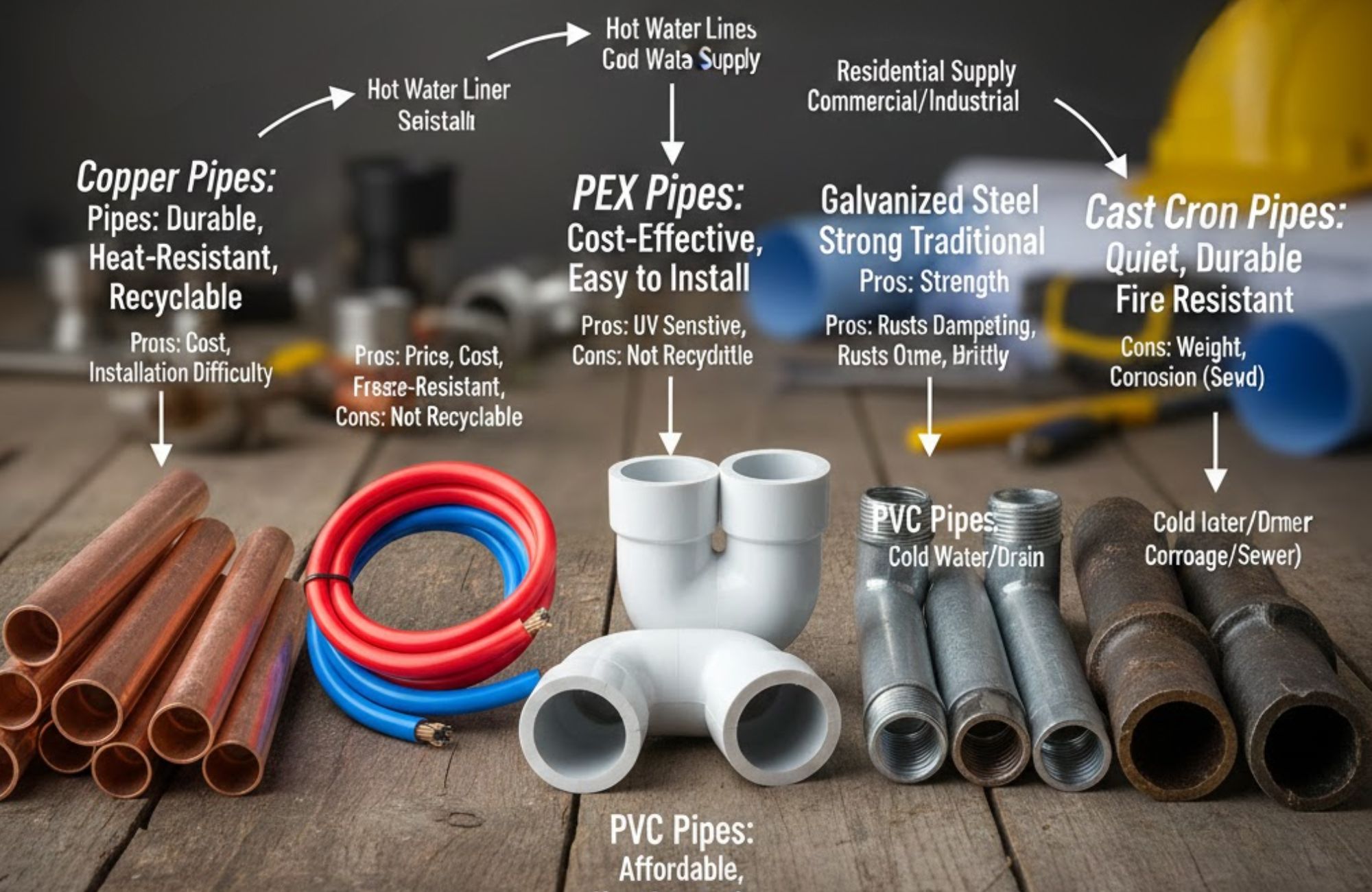
There are five major types of pipe materials commonly used in residential plumbing:
- Copper pipes are long-lasting and safe for drinking water, but can be costly.
- PEX pipes are flexible and ideal for newer homes or remodels.
- PVC pipes are used for drain lines and are cost-effective but not heat-tolerant.
- Galvanized steel pipes are durable but rust-prone and often found in older homes.
- Cast iron pipes are highly durable, especially in sewer systems, but are heavy and outdated in modern use.
Choosing the right material depends on your home’s layout, the climate, and compliance with local building codes in Northern NJ.
Types of Pipe Materials
There’s no one-size-fits-all pipe. Each material is designed for different tasks and environments in a plumbing system. Here’s a breakdown of the most common options:
Copper Pipes
Copper is a top choice for water supply lines thanks to its durability and resistance to corrosion. It’s particularly effective for both hot and cold water applications and holds up well in high-pressure systems. Copper also has natural antimicrobial properties, making it safe for drinking water.
However, copper comes with a higher cost and requires professional installation, as it involves soldering fittings. It’s also not as freeze-resistant as plastic pipes, making insulation essential in colder climates. 
PEX Pipes
PEX (cross-linked polyethylene) is a flexible plastic pipe that’s growing in popularity. It bends around corners, resists leaks, and installs quickly, making it ideal for new construction or retrofits.
Because of its flexibility, PEX reduces the number of joints needed, which lowers the risk of leaks. It performs well with both hot and cold water lines, though it should not be used in direct sunlight or outdoor plumbing applications. It’s also incompatible with certain chemicals, so water testing may be recommended.
PVC Pipes
PVC (polyvinyl chloride) is the standard choice for residential drain, waste, and vent lines. It’s lightweight, resistant to corrosion, and very affordable. It’s also easy to cut and glue with solvent cement, simplifying installation.
However, PVC is not rated for high temperatures, so it’s never used for hot water supply lines. Additionally, it may degrade when exposed to UV rays, making it unsuitable for above-ground outdoor plumbing without protection.
Galvanized Steel Pipes
Galvanized pipes were widely used in homes built before the 1960s. These metal pipes were once praised for their strength, but over time, they tend to rust and clog internally, reducing water pressure and potentially contaminating water.
Most plumbers now recommend replacing galvanized steel with copper or PEX, especially if you’re experiencing rust-colored water or reduced flow.
Cast Iron Pipes
Cast iron pipes were the go-to material for drain and sewer systems due to their noise-dampening properties and strength. They’re still found in older homes but have mostly been replaced by plastic options like ABS or PVC for ease of use and affordability.
While cast iron is highly durable, it’s heavy and prone to internal corrosion, making it less desirable for modern homes.
Pipe Options for Specific Uses
Your pipe selection should always match the specific use case, whether you’re running clean water to a bathroom or installing a sewer line under your basement.
Some of the most common applications include:
- Copper – Best for pressurized hot/cold water supply lines in kitchens and bathrooms.
- PEX – Great for interior plumbing in new construction or remodeling projects due to its ease of installation.
- PVC – Typically used for drain pipes, toilet waste lines, and vent pipes.
- Galvanized – Sometimes found in older sewer or gas lines, but rarely used in modern builds.
- Cast Iron – Still used in multi-family or commercial buildings for large sewer lines, but often replaced in homes.
Understanding what each material is designed to do helps ensure long-lasting results and compliance with your town’s building codes.
Pipe Fittings and Connections
Fittings are just as important as the pipes themselves. They help direct flow, create branches, or change direction within your plumbing system. The type of fitting you need depends on the material of the pipe and the pressure and temperature requirements of the system.
- Copper fittings require soldering and offer a tight, leak-proof seal.
- PEX fittings use crimp or expansion rings and are easy to work with, even in tight spaces.
- PVC fittings are solvent-welded with glue, making installation quick.
- Galvanized fittings thread together, but the threads can corrode over time, leading to leaks or pressure loss.
Always use fittings designed specifically for the material and size of your existing pipes. Cross-compatibility is limited and may void warranties or violate code.
Factors to Consider When Choosing a Pipe
Before selecting a pipe, weigh the following factors related to local codes to ensure long-term efficiency and compliance:
- Durability: Will the pipe material withstand corrosion and water pressure over decades of use?
- Cost: PEX and PVC are less expensive than copper but may have limitations.
- Ease of Installation: PEX and PVC are DIY-friendly; copper and cast iron require professionals.
- Temperature Tolerance: Copper handles high heat; PVC does not.
- Code Compliance: Always check with local NJ building codes before buying materials.
- Environmental Conditions: For outdoor plumbing, only use pipes rated for UV exposure and temperature changes.
Copper Pipe and PEX Pipe Comparison
To simplify the decision between the two most popular water supply options, here’s a side-by-side comparison:
| Feature | Copper Pipe | PEX Pipe |
| Durability | 50+ years | 30–50 years |
| Installation | Requires soldering | Flexible, easy to run |
| Cost | Higher | Lower |
| Corrosion Resistance | Excellent | Excellent |
| Hot Water Use | Yes | Yes |
| Freezing Risk | Higher | Lower (flexes slightly) |
Both copper and PEX are suitable for drinking water, and both meet code when installed correctly.
Drain Pipes and Vent Pipes
Drain and vent systems carry wastewater away and allow sewer gases to safely exit the home. These systems rely on gravity and air pressure to function properly, so pipe sizing and configuration are crucial.
- Drain Pipes: Typically made of PVC or ABS plastic. They move waste from toilets, sinks, and tubs to the sewer or septic tank.
- Vent Pipes: Usually vertical pipes that allow air into the plumbing system to balance pressure and prevent traps from being siphoned.
Improperly vented plumbing can lead to slow drainage, foul odors, and even backflow. Local regulations in New Jersey outline specific size and slope requirements for these systems.
Maintenance and Repair of Plumbing Systems
A proactive maintenance plan can extend the life of your pipes and prevent costly water damage.
- Annual Inspections: Check visible pipes for leaks, rust, or bulging.
- Flush and Clean: Sediment buildup can clog pipes, especially galvanized or copper.
- Prompt Repairs: Don’t wait for minor leaks. They can worsen and lead to mold or structural damage.
- Know When to Replace: If you live in an older home with galvanized steel or cast iron, you may want to replace them with safer, longer-lasting materials like PEX or PVC.
Hire a professional plumber for pipe inspections, especially if you notice discolored water, weak pressure, or frequent clogs.
Conclusion
Selecting the right water plumbing pipe is essential for building a safe, efficient, and long-lasting plumbing system. Whether you’re working with copper, PEX, PVC, or older materials like galvanized steel or cast iron, understanding each pipe’s strengths, limitations, and best-use scenarios helps you make informed decisions that align with your home’s needs, budget, and local building codes.
Looking for the Right Plumbing Pipe Solution in New Jersey? Prestige Water Group offers expert advice and professional installation for all types of plumbing systems. Call (973) 227-4740 or email info@pwgroupnj.com to speak with our licensed team. Visit pwgroupnj.com to explore our full range of services.
FAQs
What type of pipe is used for plumbing?
The most common pipes used in residential plumbing are copper pipes, PEX, and PVC. Copper is durable and ideal for water supply lines, PEX is flexible and affordable for full-house systems, and PVC is used for drains and vents.
What is the best pipe for shower plumbing?
PEX is often considered the best pipe for shower plumbing. It handles hot water well, resists corrosion, and can be installed in tight areas without many fittings. Copper is also excellent, but more expensive and harder to install.
What is a water pipe in plumbing?
A water pipe in plumbing is a conduit used to transport clean water into a building and carry wastewater out. These pipes can be made from various materials such as copper, PEX, or PVC, depending on the system and its requirements.
Is PVC pipe a plumbing material?
Yes, PVC pipe is widely used in plumbing systems, particularly for drain, waste, and vent lines. It’s not suitable for hot water supply but is valued for its low cost, corrosion resistance, and ease of installation.